We use cookies to improve user experience.. Read more about our Our policy.
Choose cookies.

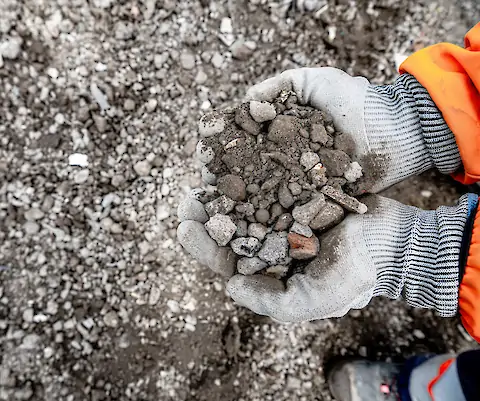
IBA processing in Germany
Incinerator Bottom Ash (IBA), also known as municipal solid waste incineration ash or grate and boiler ash, is the mineral residue left behind after the thermal treatment of municipal solid waste in energy-from-waste plants (waste incineration plants and waste-to-energy plants).
The thermal recovery of non-recyclable waste produces around 280 kg of IBA per tonne of municipal solid waste incinerated. At Blue Phoenix, we don't view IBA as waste, but as a valuable resource.
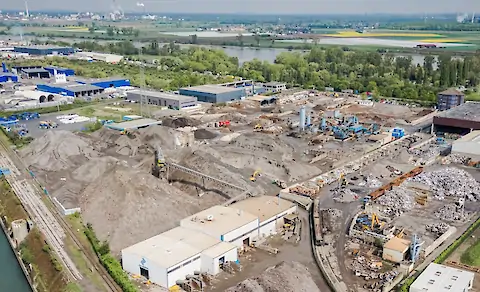
At four sites in Germany, Krefeld, Hagen, Würzburg and Schwandorf, we process around 800,000 tonnes of IBA per year from more than 25 waste incineration plants. Through advanced, state-of-the-art processing, we recover valuable materials, remove contaminants, and produce high-quality substitute construction materials that replace natural resources in construction.
Our German sites are part of the internationally active Blue Phoenix Group, which processes over 10 million tonnes of material annually across more than 50 sites in six countries, backed by more than 30 years of industry experience. This global expertise feeds directly into the quality and reliability of our processing processes in Germany.
Turning residues into resources
Our facilities are equipped for the safe and efficient processing of large volumes of IBA. In processing, we achieve a recovery rate of over 70%, diverting material away from landfill in line with circular economy principles. As part of this processing, valuable materials such as ferrous and non-ferrous metals are recovered, reducing the need for primary mining.
We produce certified substitute construction materials that meet the requirements of TL G SoB-StB and the German Substitute Construction Materials Ordinance (Ersatzbaustoffverordnung, §§ 4 to 13). Quality assurance is carried out by an independent monitoring body accredited under RAP Stra, and applies consistently across all German Blue Phoenix sites. Through comprehensive metal recycling and the use of substitute construction materials at construction sites, we make a significant contribution to conserving landfill capacity and closing the intended material loop. The use of regionally processed substitute construction materials also shortens transport distances, further contributing to reduced CO₂ emissions.
Recover valuable metals
such as ferrous and non-ferrous, reducing the need for primary mining.
Produce secondary aggregates
that comply with strict German environmental and technical standards.
Minimise landfill dependency
by keeping materials in circulation and preserving natural resources
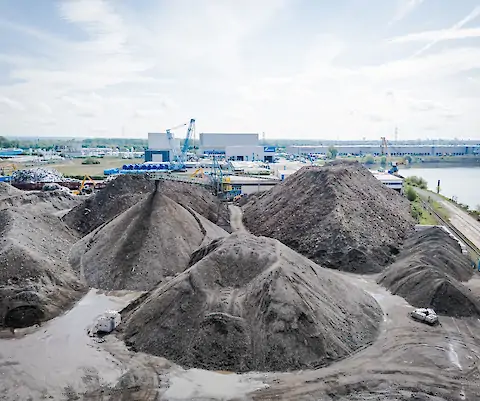
Substitute construction materials
The substitute construction materials obtained from processing (IBA-2, EBV-certified) are used in road construction, dykes, and infrastructure projects, offering a safe, cost-effective, and sustainable alternative to primary materials. In doing so, we help municipalities, authorities, and industrial partners achieve Germany's circular economy and climate targets.